Introduction
For manufacturers, assemblers, and product-based businesses, accurate production planning depends on having complete visibility into the materials required to create finished products. This is where Bills of Materials (BOMs) play a critical role. A BOM serves as the foundation of manufacturing operations by outlining the components, quantities, and resources needed to produce a product.
Cin7 Core provides robust BOM management capabilities that help businesses streamline production, improve inventory accuracy, and gain greater control over manufacturing processes. By effectively managing BOMs within Cin7 Core, organizations can reduce errors, improve efficiency, and make better operational decisions.
What Is a Bill of Materials (BOM)?
A Bill of Materials is a comprehensive list of all the raw materials, components, sub assemblies, and quantities required to manufacture or assemble a finished product. Think of a BOM as a recipe for production. Just as a recipe specifies the ingredients needed to prepare a meal, a BOM specifies every item required to build a product.
Without an accurate BOM, manufacturers may struggle with inventory shortages, production delays, and inaccurate costing.
How Cin7 Core Supports BOM Management
Cin7 Core offers integrated BOM functionality designed to simplify manufacturing and assembly processes. Businesses can create, manage, and update BOMs within the same platform used for inventory management, purchasing, and production planning.
This centralized approach helps eliminate manual spreadsheets and reduces the risk of errors caused by disconnected systems.
1. Creating Accurate BOMs
The foundation of successful manufacturing starts with creating accurate and detailed BOMs.
When building a BOM in Cin7 Core, businesses should ensure that:
- All components are listed correctly
- Quantities are accurate
- Units of measure are standardized
- Supplier information is current
- Product versions are clearly documented
Incomplete or inaccurate BOMs can lead to purchasing mistakes, inventory discrepancies, and production delays. Regular reviews help ensure BOM data remains reliable as products evolve.
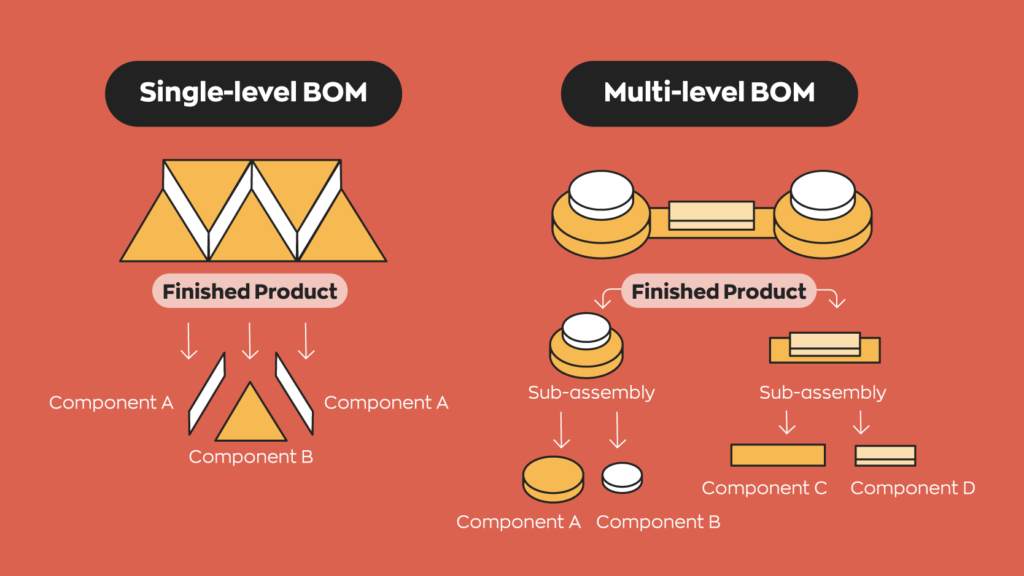
2. Managing multi-level BOMs
Many products contain sub assemblies that consist of their own components and production processes. These structures are known as multi-level BOMs. Cin7 Core allows businesses to manage complex multi-level BOM structures efficiently, providing greater visibility into product composition and production requirements.
3. Improving Inventory Accuracy
One of the biggest advantages of BOM management in Cin7 Core is improved inventory accuracy. When production orders are created, the system automatically allocates the required materials based on BOM specifications. As components are consumed during manufacturing, inventory levels are updated accordingly. Accurate inventory data supports better decision-making throughout the supply chain.
Best Practices for BOM Management in Cin7 Core
To maximize the benefits of BOM management, businesses should follow several best practices:
1. Regularly Review BOMs
Product specifications often change over time. Regular reviews help ensure BOMs remain accurate and current.
2. Standardize Data Entry
Consistent naming conventions and units of measure reduce confusion and improve reporting accuracy.
3. Monitor Material Costs
Updating component costs regularly ensures more accurate profitability analysis.
4. Track Product Revisions
Version control helps prevent production teams from using outdated BOM information.
5. Train Employees
Proper training ensures teams understand how to create, update, and maintain BOM records effectively.
Conclusion
Bills of Materials are the backbone of efficient manufacturing operations, providing the detailed information needed to plan production, manage inventory, and control costs. For manufacturers seeking greater control over their production processes, effective BOM management in Cin7 Core is a key step toward improved productivity, profitability, and long-term growth.